The Complete Retaining Wall Guide for St. Louis Homeowners
Retaining walls in St. Louis typically cost $20 to $50 per square face foot, with most residential projects ranging from $3,000 to $15,000. St. Louis's hilly terrain and clay-heavy soil make retaining walls one of the most common hardscaping projects in the area. Here is everything you need to know before starting yours.
With over 20 years of building retaining walls across the greater St. Louis metro, including Jefferson County and St. Charles County, we have worked on everything from small garden walls to large-scale structural systems that hold back entire hillsides. This guide covers the practical information that homeowners actually need -- not just generic advice you can find anywhere.
When Do You Need a Retaining Wall?
Not every slope needs a retaining wall, but many in the St. Louis area do. Here are the most common situations where a retaining wall is the right solution:
- Grade changes over 12 inches. If your yard has a slope that drops more than a foot over a short distance, a retaining wall creates a clean transition between levels and prevents soil from washing away.
- Erosion problems. St. Louis rain can move a lot of soil in a hurry, especially on clay-heavy properties. If you are losing dirt, mulch, or plantings every time it rains, a retaining wall with proper drainage solves the problem permanently.
- Creating usable flat areas. Many St. Louis yards are too hilly to use effectively. A retaining wall system can carve out level areas for a patio, play area, garden, or pool deck on an otherwise unusable slope.
- Structural support. When a slope threatens a driveway, foundation, sidewalk, or neighboring property, a structural retaining wall provides the engineering needed to stabilize the earth permanently.
- Aesthetic enhancement. Even on gentle slopes, a low retaining wall creates defined planting beds, adds dimension to flat landscapes, and gives your property a finished, intentional look.
Types of Retaining Walls
The right type of retaining wall depends on the height required, the soil conditions, your aesthetic preferences, and your budget. Here is how the most common options compare:
| Type | Best For | Cost Range | Lifespan |
|---|---|---|---|
| Concrete block | Most applications | $20 - $35 / sq ft | 50+ years |
| Natural stone | Decorative walls | $30 - $50 / sq ft | 75+ years |
| Timber | Small garden walls | $15 - $25 / sq ft | 15 - 20 years |
| Poured concrete | Large structural walls | $25 - $40 / sq ft | 50+ years |
For most residential projects in St. Louis, concrete block (segmental) retaining walls offer the best combination of strength, appearance, and value. Products from manufacturers like Unilock come in a wide range of textures, colors, and face profiles that look great while providing serious structural performance. As an Authorized Unilock Contractor, we install the full line and can help you choose the right product for your application.
Timber walls are the least expensive option but have the shortest lifespan. In the St. Louis climate, with our wet springs and freeze-thaw winters, treated lumber breaks down faster than in drier regions. We generally recommend timber only for low decorative walls under 2 feet that are not holding back significant soil pressure.
St. Louis Soil Considerations
The St. Louis metro area sits on some of the most challenging soil in the Midwest for hardscaping projects. Understanding your soil is critical to building a retaining wall that lasts.
Clay-Heavy Soil
Most of the greater St. Louis area has clay-dominant soil, which creates two major challenges for retaining walls. First, clay expands when wet and contracts when dry, putting lateral pressure on walls that sandy soil would not. Second, clay drains poorly, which means water builds up behind walls much faster than in well-draining soil.
Proper engineering accounts for these forces. A retaining wall designed for sandy soil in Arizona will not perform the same way in St. Louis clay. This is why hiring a local contractor with experience in St. Louis soil conditions matters more than finding the lowest bidder.
Frost Line Depth
The frost line in the St. Louis area is approximately 24 to 30 inches. Retaining wall footings must extend below this depth to prevent frost heave -- the upward movement of soil and structures caused by freezing water expanding in the ground. A wall with a shallow footing will shift, lean, and eventually fail after a few Missouri winters.
Drainage Is Everything
If there is one thing I want every homeowner to understand about retaining walls, it is this: drainage is the number one factor that determines whether a wall lasts 50 years or fails in 5.
Water pressure behind a retaining wall (called hydrostatic pressure) is the primary cause of wall failure. When water cannot drain through and away from the wall, it builds up and pushes against the structure with tremendous force. In St. Louis's clay soil, which holds water like a sponge, this is an especially serious concern.
Every retaining wall we build includes these drainage components:
- Drainage aggregate. A minimum of 12 inches of clean, angular gravel behind the wall face, from the footing to within 6 inches of the top. This creates a free-draining zone that prevents water from building up against the wall.
- Perforated drain pipe. A 4-inch perforated PVC pipe at the base of the wall, wrapped in filter fabric, that collects water and carries it to a daylight outlet or storm drain connection.
- Weep holes. Openings in the wall face at regular intervals that allow trapped water to escape rather than build pressure.
- Filter fabric. Geotextile fabric between the drainage aggregate and the native clay soil prevents fine particles from clogging the gravel over time.
- Surface drainage. Proper grading behind and on top of the wall directs surface water away from the wall, reducing the amount of water that enters the drainage system in the first place.
Skipping any of these components is a recipe for failure. We have repaired and rebuilt hundreds of retaining walls in the St. Louis area that failed because the original installer did not install proper drainage. It is always cheaper to do it right the first time.
Permits and Regulations in St. Louis
Permit requirements for retaining walls vary by municipality across the St. Louis metro area, but here are the general guidelines:
- Walls over 4 feet exposed height typically require a building permit and may need engineered drawings signed by a licensed professional engineer.
- Walls near property lines may be subject to setback requirements. Most St. Louis municipalities require walls to be at least 2 to 5 feet from the property line.
- Walls affecting drainage that redirect water toward a neighboring property may require additional review.
- HOA communities in areas like Wildwood, Chesterfield, and Ballwin often have their own approval processes on top of municipal permits.
We handle the permit process for every project that requires one. It is part of the service -- you should not have to navigate municipal codes and engineering requirements on your own.
DIY vs. Professional Installation
Small decorative garden walls under 2 feet are reasonable DIY projects for handy homeowners. Beyond that, professional installation is strongly recommended -- and here is why:
- Structural integrity. Walls over 2 feet are holding back thousands of pounds of soil. Improper construction can lead to catastrophic failure that damages your property or your neighbor's.
- Drainage engineering. Getting the drainage right requires understanding soil hydrology, pipe sizing, and grade calculations that go beyond what most homeowners are equipped to handle.
- Equipment requirements. Retaining wall construction requires excavation equipment, compaction equipment, and material handling capabilities that most homeowners do not have.
- Liability. A failed retaining wall that damages a neighbor's property or a public sidewalk creates liability issues. Professional contractors carry insurance for exactly this reason.
- Warranty. Professional installation comes with workmanship warranties, and as an Authorized Unilock Contractor, we provide extended manufacturer material warranties that are not available on DIY installations.
How Much Does a Retaining Wall Cost in St. Louis?
Beyond the per-square-foot ranges in the table above, here are some typical project costs we see in the St. Louis area:
- Small garden wall (20-30 linear feet, 2 feet high): $2,500 - $5,000
- Standard residential wall (40-60 linear feet, 3-4 feet high): $6,000 - $15,000
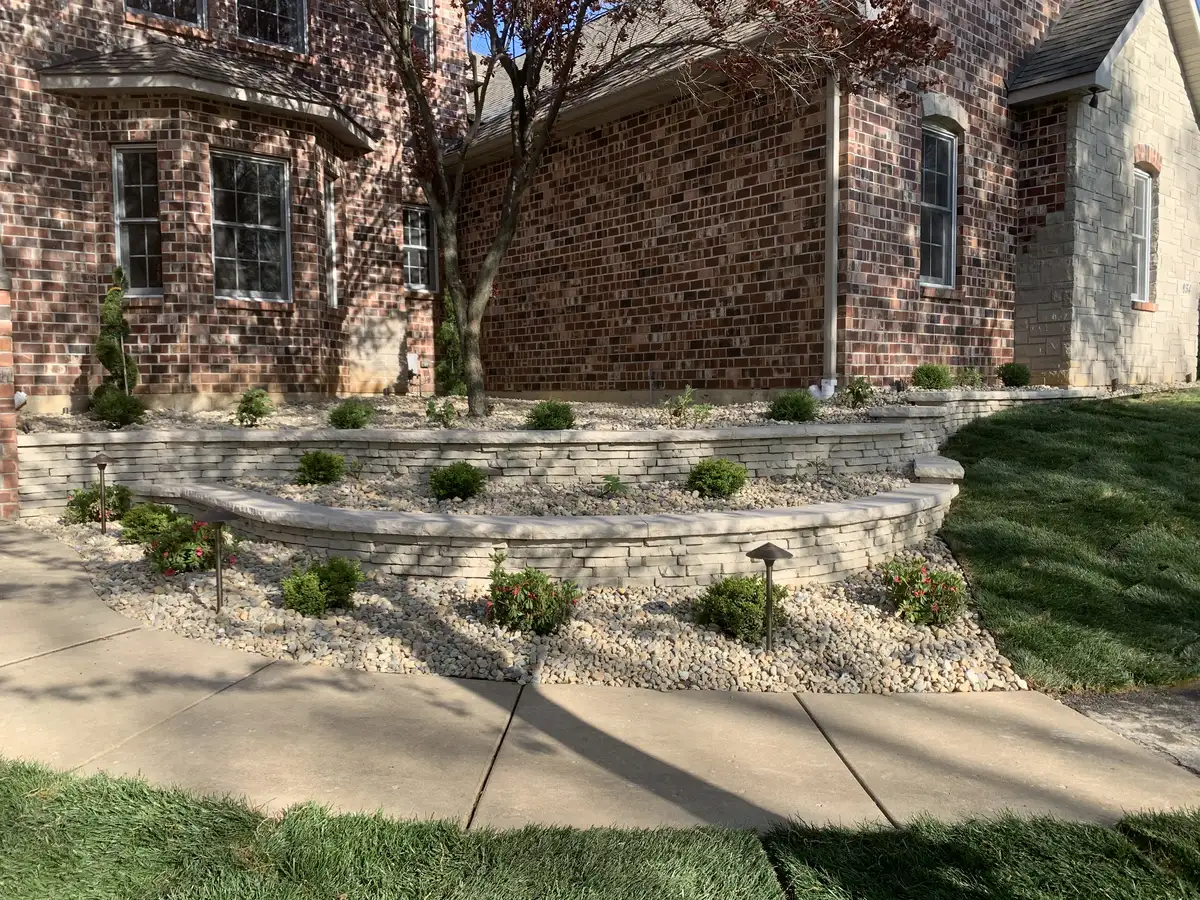
- Tiered wall system (two walls with planting terrace between): $10,000 - $25,000
- Large structural wall (engineered, 5+ feet high): $15,000 - $40,000+
Factors that increase cost include difficult site access (steep slopes, narrow gates), heavy clay removal and replacement, engineering requirements for taller walls, and decorative caps or facing.
Get Your Free Retaining Wall Estimate
Every retaining wall project is unique. The slope, soil conditions, drainage patterns, and your goals all factor into the design and cost. The only way to get an accurate price is with an on-site evaluation.
Travis will visit your property, assess the terrain, discuss your options, and provide a detailed written estimate that covers materials, drainage, labor, and timeline. No obligation, no pressure -- just honest advice from someone who has been building retaining walls in St. Louis for over 20 years.
Call us at (314) 630-8814 or request a free estimate online.
Learn more about our retaining wall services, browse our full hardscaping capabilities, or contact us to schedule your consultation.