Retaining Wall Construction in St. Louis
Professionally engineered retaining walls that solve drainage problems, prevent erosion, and create usable outdoor space on any terrain.
Retaining Walls Built for St. Louis Terrain
Retaining walls are one of the most critical hardscape elements for properties in the greater St. Louis area. The hilly terrain across Jefferson County, St. Charles County, and the city's western suburbs creates grade changes that need to be managed properly. Without a well-built retaining wall, you get erosion, drainage problems, and wasted yard space. In Jefferson County, MO, properties along the Meramec River bluffs, in Arnold, Festus, and Hillsboro regularly require engineered walls to manage the steep grades and heavy clay soils common throughout the area.
At Green Operations, Travis and the crew have been building retaining walls across St. Louis and Jefferson County for over 20 years. We have worked on everything from small garden walls to large structural walls holding back thousands of pounds of earth. Every wall we build starts with proper engineering, correct drainage behind the wall face, and materials that are rated for the load they need to carry.
A retaining wall is not just functional. Done right, it transforms a sloped, unusable hillside into terraced garden beds, flat patio areas, or accessible walkways. It adds real value to your property while solving real problems.
Types of Retaining Walls We Build
Different situations call for different wall types. Here is what we specialize in and when each type makes sense.
Segmental Block Walls
Segmental retaining wall (SRW) blocks are the most common choice for residential retaining walls in St. Louis. These interlocking concrete units stack together with a built-in setback that creates natural batter, the slight backward lean that gives the wall its structural strength. Block walls handle grade changes from 1 foot to over 10 feet when properly engineered with geogrid reinforcement.
We install blocks from Unilock, Belgard, and other premium manufacturers. Colors and textures range from smooth modern finishes to rustic tumbled looks that mimic natural stone.
Natural Stone Walls
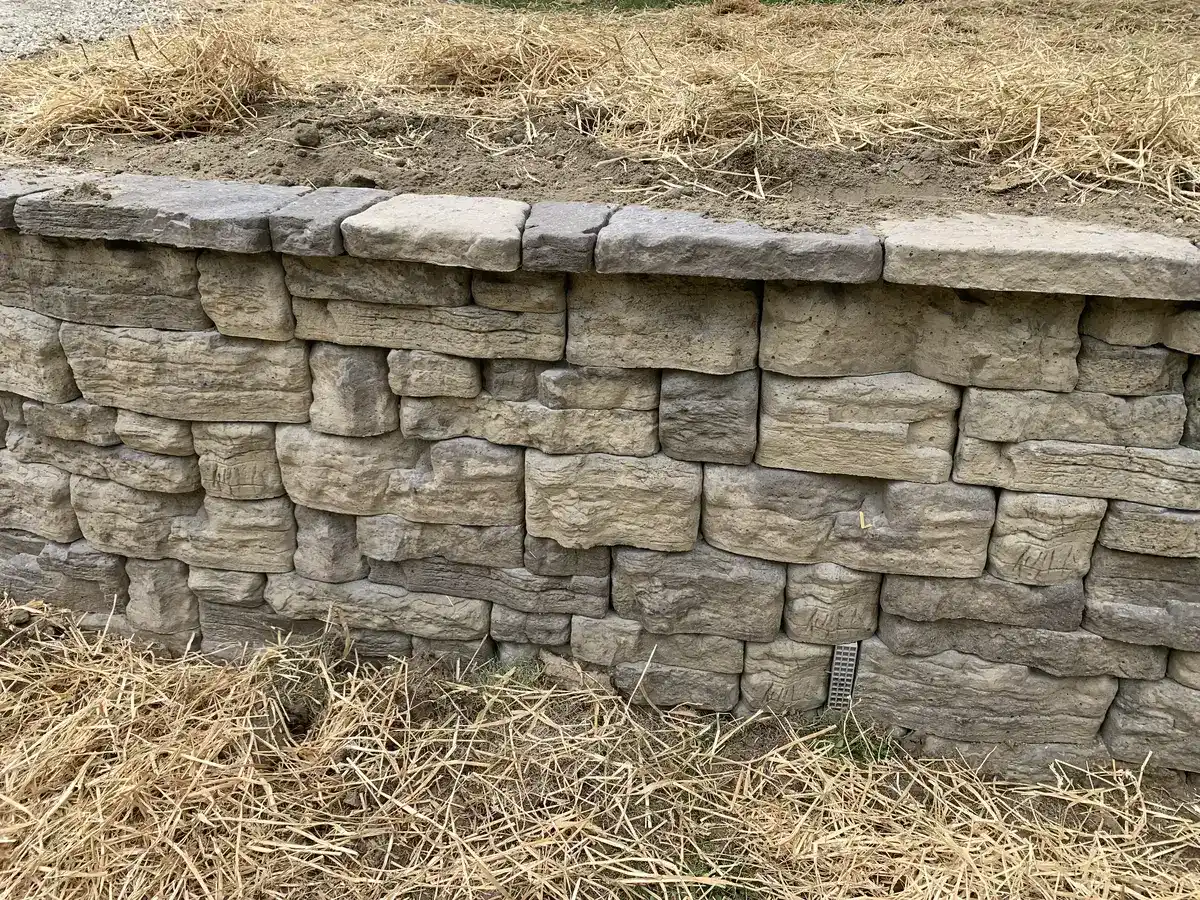
Natural stone retaining walls offer a timeless, organic appearance that blends with the landscape. We build with locally sourced limestone, fieldstone, and other native Missouri stone. Natural stone walls work best for walls under 4 feet where the rustic aesthetic is a priority.
Dry-stacked stone walls allow water to pass through naturally, reducing hydrostatic pressure. Mortared stone walls provide a tighter, more finished look and can handle slightly greater heights with proper footing.
Gravity & Structural Walls
Gravity walls rely on their own mass to resist soil pressure. These heavy-duty walls use large-format blocks or boulders and are typically used for walls over 4 feet tall that need to retain significant earth loads. For walls above 4 feet in St. Louis, engineering calculations and geogrid reinforcement are standard practice.
Structural walls may require permits depending on your municipality. We handle the engineering documentation and can coordinate with local building departments on your behalf.
Decorative & Seating Walls
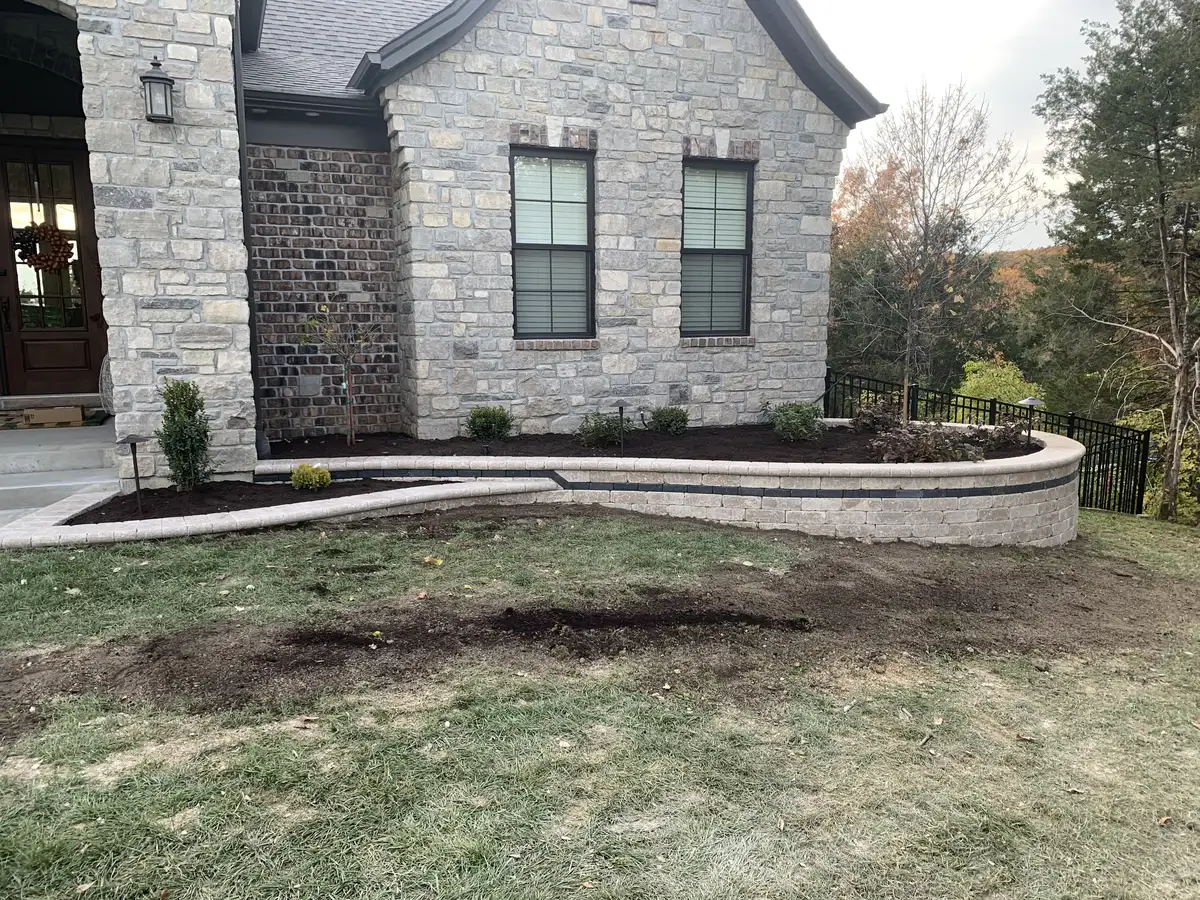
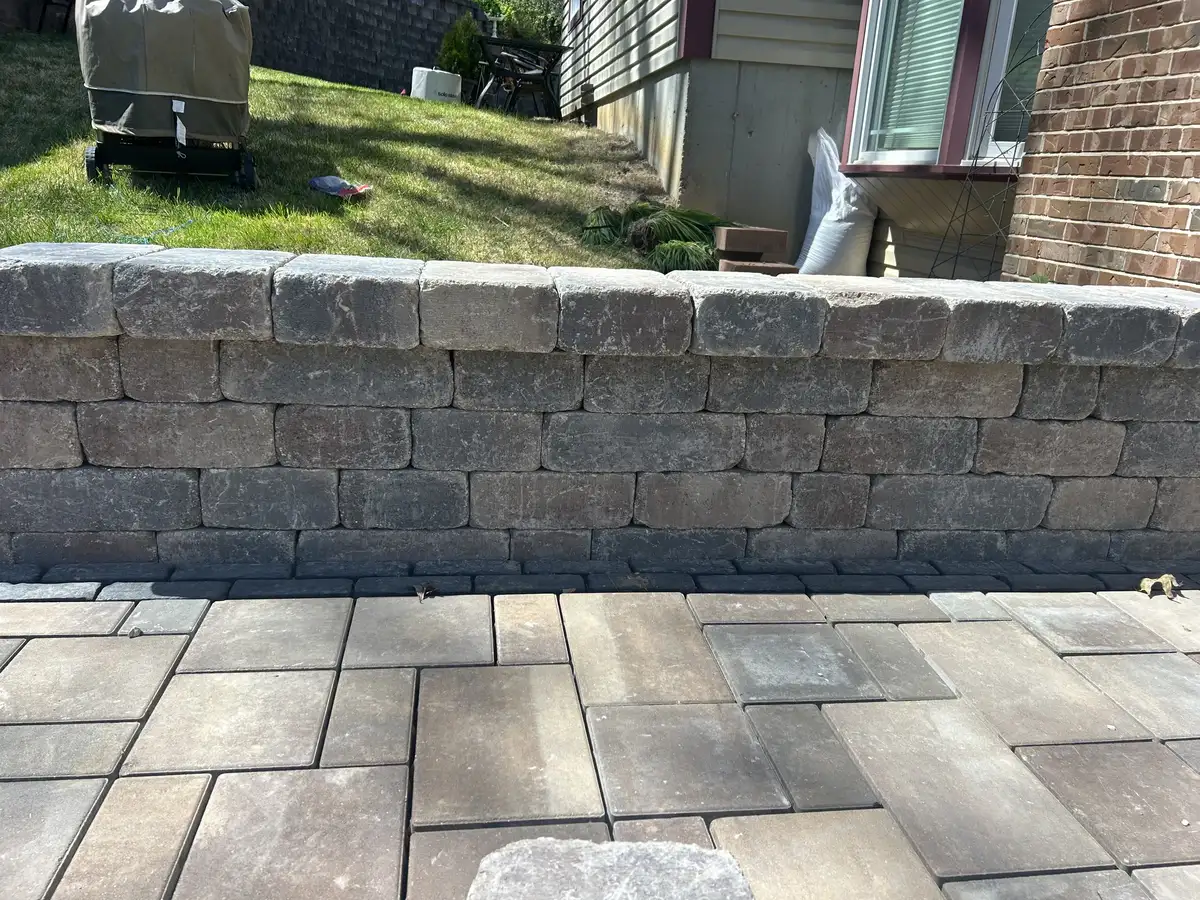
Not every wall needs to hold back a hillside. Decorative walls and seating walls define outdoor living spaces, create raised planters, and provide built-in seating around patios and fire pits. These shorter walls (typically 18 to 30 inches) are often capped with matching or contrasting stone for a finished look.
Seating walls are one of the most requested additions to our paver patio projects. They eliminate the need for extra outdoor furniture and create a clean, permanent perimeter around your entertainment area.
Engineering & Drainage
Drainage is the number one reason retaining walls fail. Water building up behind a wall creates hydrostatic pressure that pushes the wall outward until it cracks, leans, or collapses entirely. Every retaining wall we build includes proper drainage as a non-negotiable part of the design.
Drainage Systems
We install perforated drain pipe (also called French drain or drain tile) at the base of every structural wall. This pipe sits in a bed of clean gravel wrapped in filter fabric, collecting water from behind the wall and redirecting it to a safe discharge point. The gravel backfill behind the wall extends 12 inches or more, giving water a clear path to the drain rather than building up against the block.
In St. Louis's heavy clay soils, drainage is even more critical. Clay holds water rather than letting it percolate through, which means a wall without drainage can see hydrostatic pressure build up rapidly after a heavy rain.
Geogrid Reinforcement
For walls over 3 to 4 feet tall, we install geogrid, a high-strength polymer mesh that extends from behind the wall face back into the compacted soil. Geogrid anchors the wall into the earth, distributing the soil load across a much wider area. This is the same technology used in highway retaining walls and commercial construction.
Compaction is equally important. Every 6 to 8 inches of backfill is mechanically compacted before the next layer goes on. Skipping compaction is one of the biggest shortcuts bad contractors take, and it leads to settlement, cracking, and eventual failure. We do not skip it.
When Do You Need a Retaining Wall?
A retaining wall is the right solution when your property has a grade change that creates problems or limits how you use your outdoor space. Here are the most common situations we see.
Erosion Control
If soil is washing away from a slope on your property, especially toward your foundation, driveway, or neighbor's yard, a retaining wall stops the erosion and stabilizes the hillside. St. Louis gets an average of 42 inches of rain per year, and without proper grading and retention, that water moves a lot of soil.
Creating Usable Flat Space
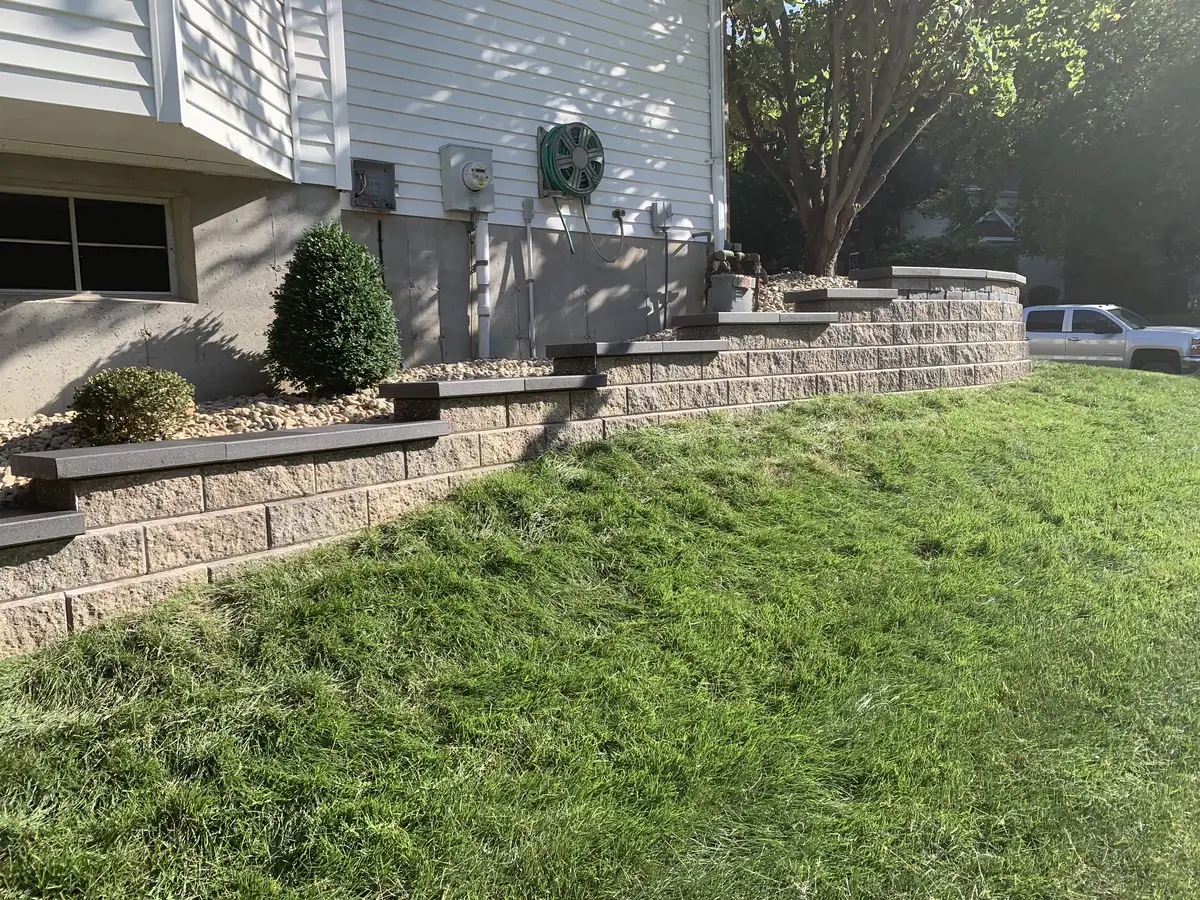
A sloped backyard is not very useful for a patio, pool, or play area. Retaining walls let us terrace the slope, creating flat levels that can be used for hardscaping, lawn, gardens, or outdoor living spaces. Many of our clients gain hundreds of square feet of usable yard with a well-placed wall.
Driveway & Foundation Support
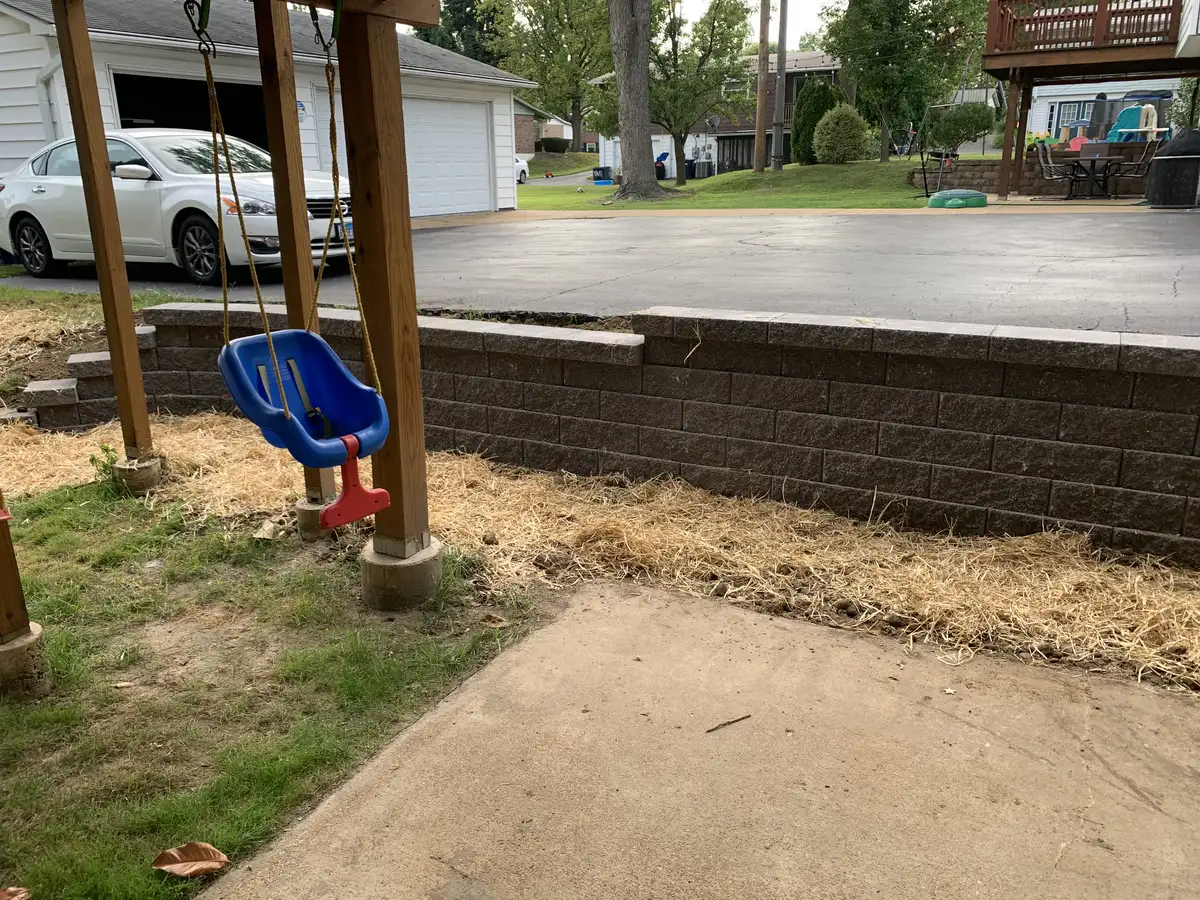
Grade changes near driveways and home foundations need structural support. A retaining wall prevents soil from sliding toward (or away from) these critical areas. We often build walls along driveways where the grade drops off sharply to one side, or behind homes where the backyard slopes toward the house.
Aesthetic Terracing & Garden Beds
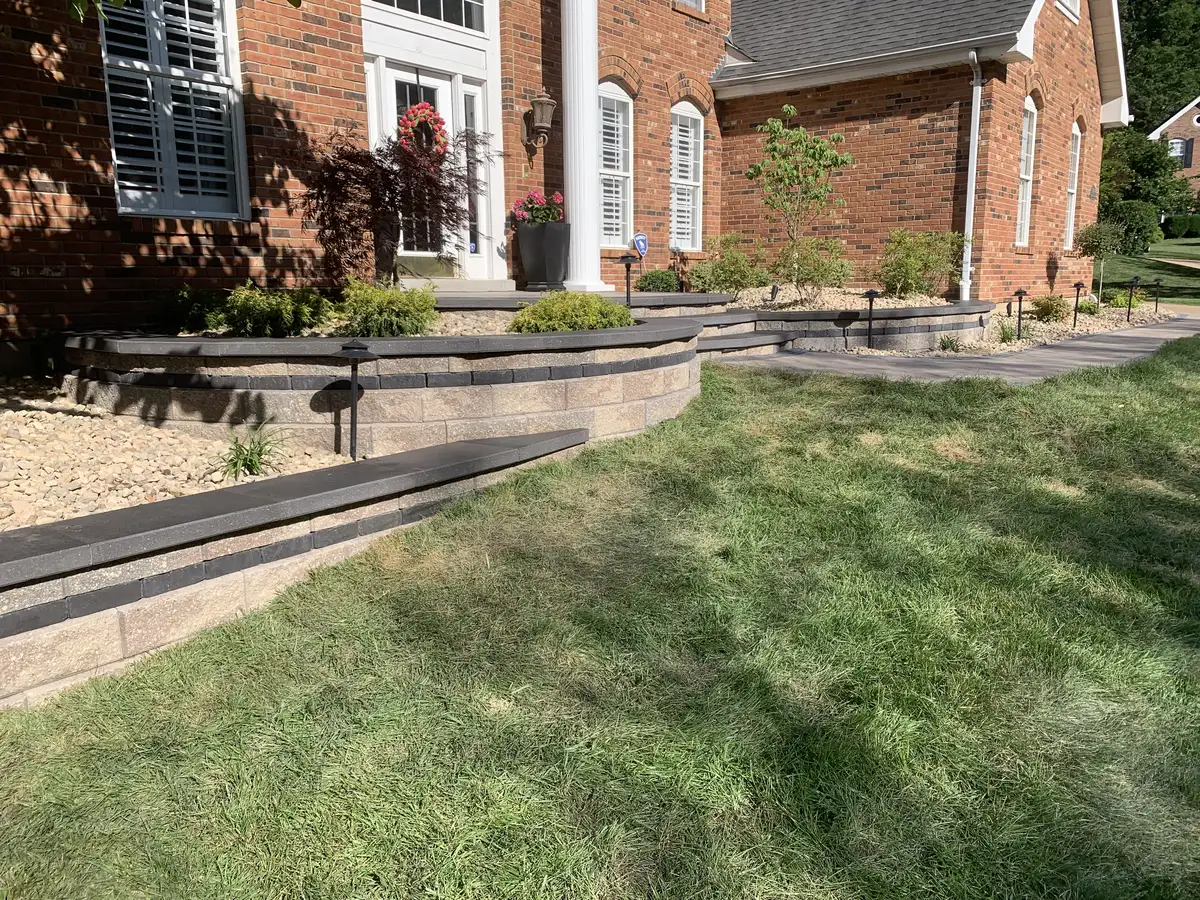
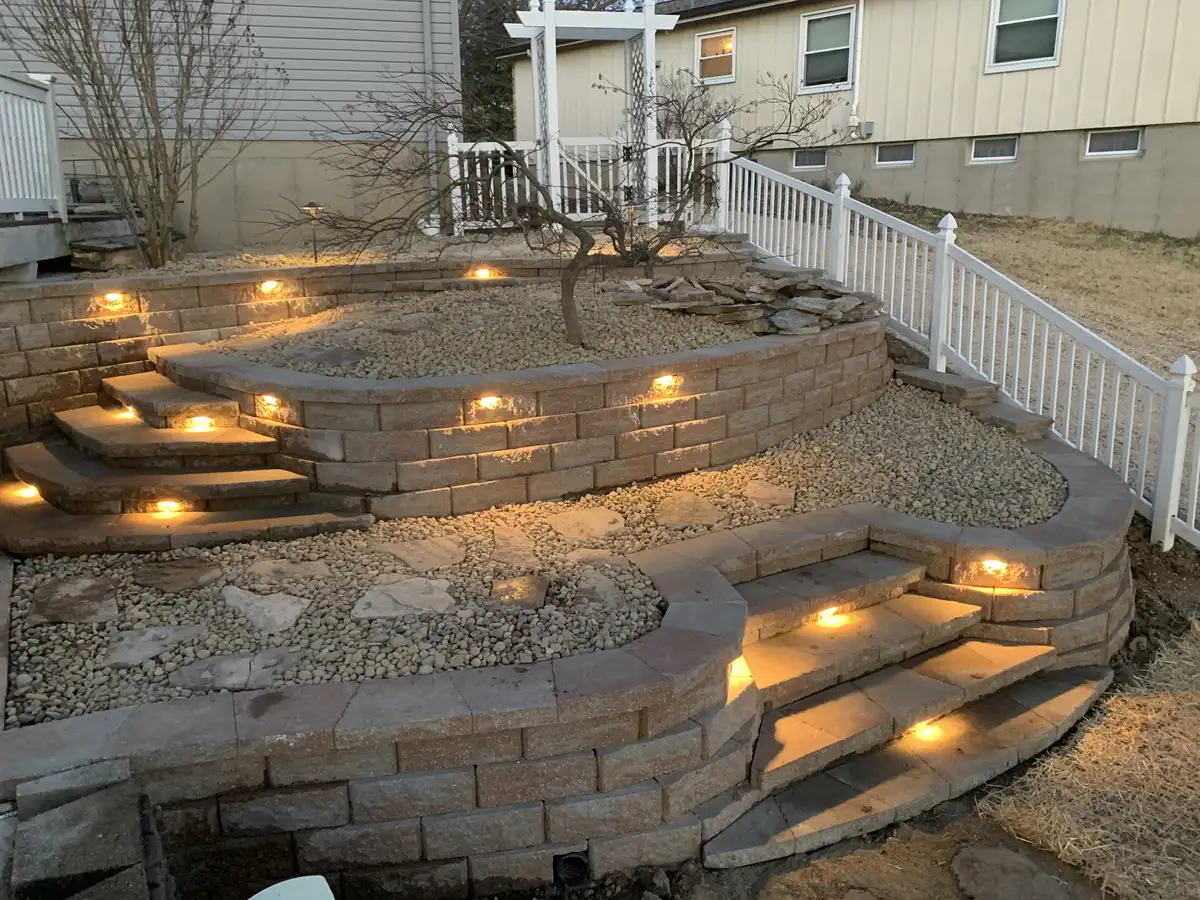
Even gentle slopes benefit from terracing. Tiered retaining walls with planting beds between levels create a layered landscape that adds dimension, color, and visual interest to an otherwise plain hillside. Raised planters built from matching wall block bring garden beds to a comfortable working height.
Our Retaining Wall Process
Site Assessment & Design
We evaluate the slope, soil conditions, drainage patterns, and any existing structures. For walls over 4 feet, we calculate the engineering requirements including geogrid spacing and footing depth. You receive a detailed design and estimate before any work starts.
Excavation & Footing
We excavate to the correct depth below grade (typically 10-20% of the wall height is buried underground for stability). A compacted gravel footing provides a level, stable base that distributes the wall's weight evenly. This below-grade portion is invisible but essential.
Wall Construction & Drainage
Block is laid course by course with the drain pipe and gravel backfill installed as we go. Geogrid layers are placed at the engineered intervals. Each course is checked for level and alignment. We backfill and compact in lifts, never all at once.
Caps, Grading & Finish
Wall caps are adhesive-set for a clean finished look. Final grading directs surface water away from the wall. We install any additional landscaping, steps, or patio connections. The site is cleaned up and you walk the finished project with Travis before we call it done.
Retaining Wall Cost Guide
Retaining wall costs depend on the wall height, length, material choice, and site conditions. Here are general ranges for St. Louis projects to help you plan. Every project gets a free, detailed estimate specific to your property.
Small Walls
$2,000 - $5,000
Under 3 feet tall, 20-40 linear feet. Garden borders, raised planters, and short grade changes. Typically does not require geogrid or engineering.
Medium Walls
$5,000 - $15,000
3-5 feet tall, 30-80 linear feet. Most residential retaining walls fall in this range. Includes geogrid reinforcement and full drainage system.
Large Walls
$15,000 - $40,000+
Over 5 feet tall or 100+ linear feet. Major grade changes, tiered wall systems, integrated stairs and patios. Full engineering and permitting included.
Factors that affect cost: wall height, total linear feet, material selection (block vs. natural stone), site access for equipment, drainage complexity, and whether steps or caps are included. Natural stone walls generally cost 20-40% more than block walls for the same dimensions.
Choosing a Retaining Wall Contractor in St. Louis
Not all retaining wall contractors in St. Louis are equal, and choosing the wrong one can cost you thousands in repairs down the road. A retaining wall is a structural element that holds back tons of earth, manages water, and supports the stability of your property. It is not a project where you want the lowest bidder cutting corners on drainage or base preparation.
When evaluating retaining wall contractors, ask these questions before signing a contract. First, ask whether they install drain pipe and gravel backfill on every wall. If a contractor tells you drainage is not necessary for your project, walk away. Hydrostatic pressure from water buildup behind the wall is the number one cause of retaining wall failure in the St. Louis area, where heavy clay soils trap moisture instead of letting it drain naturally. Every wall Green Operations builds includes perforated drain pipe at the base, clean gravel backfill extending at least 12 inches behind the wall face, and filter fabric to prevent fine soil particles from clogging the system.
Second, ask about geogrid reinforcement for walls over 3 to 4 feet tall. Geogrid is a polymer mesh that anchors the wall into the soil behind it, distributing the lateral earth pressure across a much wider area. Without geogrid, taller walls rely solely on gravity and the friction between block courses, which is not enough for the loads that St. Louis terrain can produce. We install geogrid at engineered intervals based on the wall height, soil type, and surcharge loads -- the same standard used in commercial and highway retaining wall construction.
Third, ask about compaction practices. Proper compaction of the aggregate base and every backfill layer is critical for long-term stability. Each lift should be mechanically compacted in 6-to-8-inch layers before the next course of block is set. Skipping compaction or backfilling all at once leads to settlement, which causes the wall to lean, crack, or separate at the joints. Green Operations compacts every layer without exception, regardless of wall height or project size.
Finally, check for manufacturer certifications and insurance. As an Authorized Unilock Contractor, Green Operations meets strict installation standards and provides extended manufacturer warranties that non-authorized contractors cannot offer. We carry full liability insurance and workers compensation coverage for every crew member on your job site. When you hire Green Operations for your retaining wall project, you are hiring a team with over 20 years of experience building walls that are engineered to last across St. Louis, Jefferson County, and St. Charles County.
Retaining Wall Project Gallery
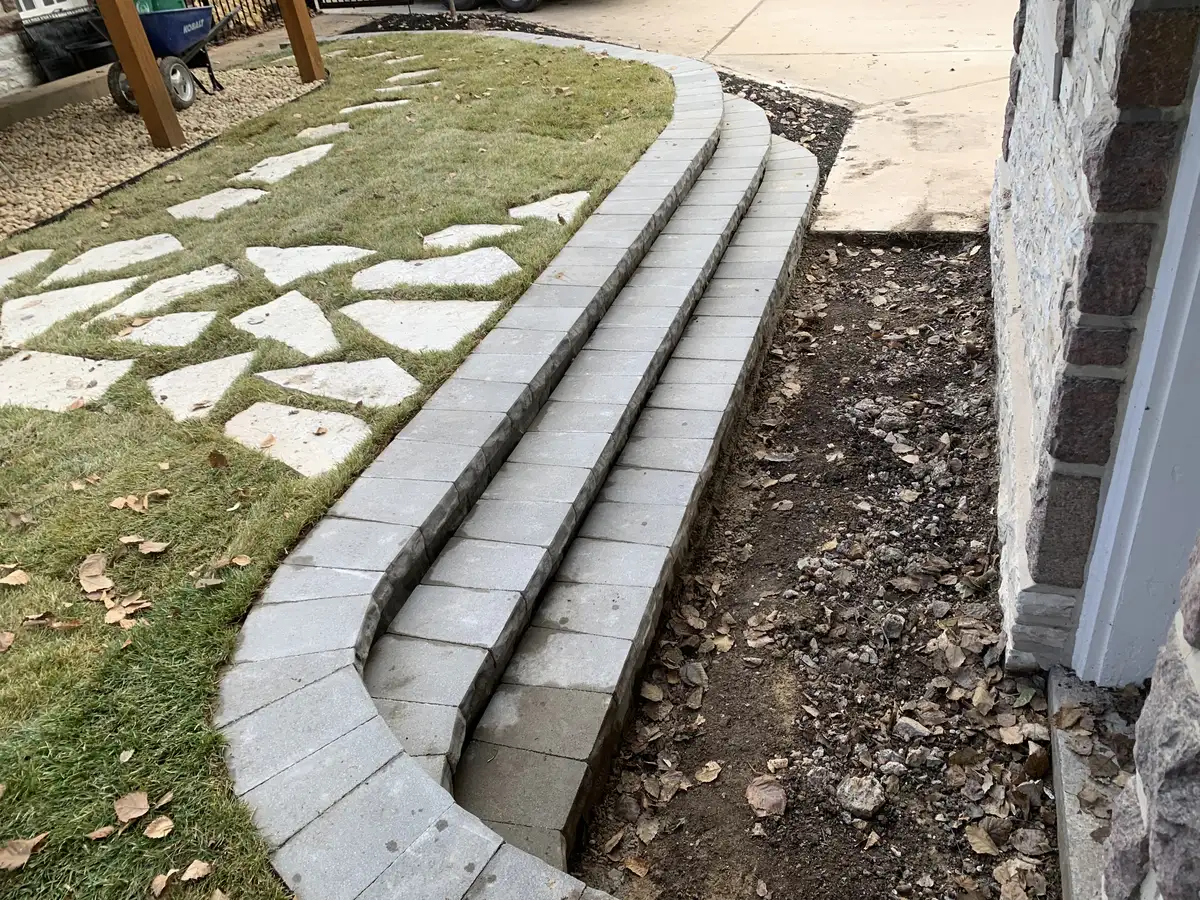
Real retaining wall projects completed by Green Operations across St. Louis.
Pair Your Retaining Wall With
Hardscaping
Patios, walkways, and driveways that connect seamlessly with your new retaining wall.
Paver Patios
Create a flat patio area behind your retaining wall and maximize your usable outdoor space.
Outdoor Living
Fire pits, kitchens, and seating areas that transform your terraced yard into a destination.
Need a Retaining Wall in St. Louis?
Get a free on-site assessment and estimate. Travis will evaluate your slope, discuss your options, and provide a detailed plan with no obligation.
Retaining Wall FAQ
Retaining wall costs in St. Louis range from $2,000 to $5,000 for small garden walls, $5,000 to $15,000 for mid-size residential walls, and $15,000 to $40,000 or more for large structural walls or tiered systems. The main cost drivers are wall height, total length, material choice, and site access. Natural stone costs 20-40% more than manufactured block for equivalent dimensions. We provide free, itemized estimates so there are no surprises.
In most St. Louis County municipalities, retaining walls over 4 feet tall (measured from the base of the footing to the top of the wall) require a building permit and sometimes engineered drawings. Some cities set the threshold at 3 feet. Walls in floodplains or near property lines may have additional requirements. We are familiar with the permit processes across the St. Louis area and handle the paperwork and inspections as part of the project.
A properly built retaining wall with correct drainage should last 50 years or more. The concrete blocks themselves are essentially permanent. The most common failure point is drainage, and that is why we install perforated pipe, gravel backfill, and filter fabric on every structural wall we build. Walls that fail prematurely almost always have a drainage or base preparation problem. We build every wall to the same standard regardless of size, because cutting corners on a retaining wall is not something you can fix easily later.