
Outdoor Kitchen Installation in St. Louis
Custom grill islands, stone counters, smoker stations, storage, and paver patio layouts designed around how you cook outside.
A Kitchen That Works With the Patio, Not Against It
An outdoor kitchen is not just a grill with stone around it. The island has to sit at the right height, the counter needs room for prep and serving, the cooking zone needs safe clearance, and the patio around it has to drain correctly after a St. Louis storm. Green Operations plans those details together so the kitchen feels built into the backyard instead of added as an afterthought.
Travis starts each outdoor kitchen project by walking the property, measuring access from the house, reviewing utilities, and studying the way people will move between the back door, dining table, grill, and seating area. A compact South County patio may need a straight grill island with storage and a small landing counter. A larger Jefferson County backyard may need an L-shaped kitchen, bar seating, and retaining walls to create a level cooking terrace on a slope. St. Charles County homes often have room to separate the hot cooking line from the fire pit or pool deck so guests can gather without crowding the person at the grill.
Because Green Operations also builds paver patios, retaining walls, and full outdoor living spaces, the kitchen is designed as part of the whole hardscape. That means the base, utilities, paver pattern, wall block, steps, lighting, and drainage all line up before construction starts.
Outdoor Kitchen Layouts We Build
The right layout depends on how often you cook outside, how many people you host, and how much patio space can be dedicated to the kitchen without choking off the seating area.
Straight Grill Islands
A straight island is the most efficient option for smaller patios. It usually includes a built-in grill or smoker, a landing counter on each side, storage below, and a stone or paver surround that matches the patio. This layout keeps cost controlled while still giving the backyard a permanent cooking station.
L-Shaped Kitchens
An L-shaped island creates a dedicated prep side and a cooking side. It is a strong fit for St. Louis homeowners who want room for a grill, side burner, sink, and serving counter without creating a long wall that blocks traffic. The corner can also define a dining area beside the patio.
Bar-Height Serving Counters
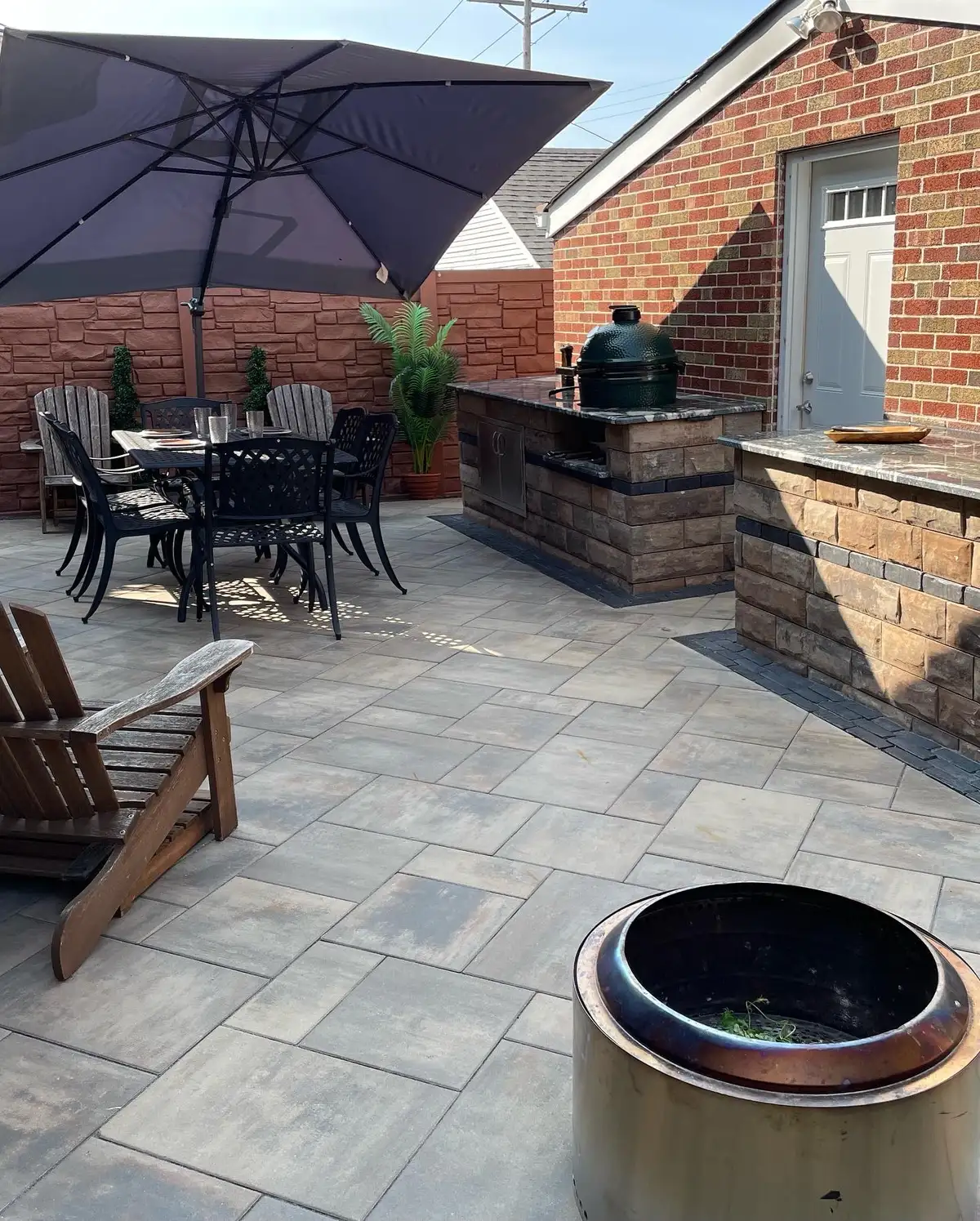
Raised counters let guests sit near the cook without standing in the work zone. We use them carefully so they do not create a bulky wall across the patio. A short bar run works well near pools, fire pits, and covered patios where food and drinks need a landing spot.
Grills, Smokers, Pizza Ovens, and Big Green Egg Stations
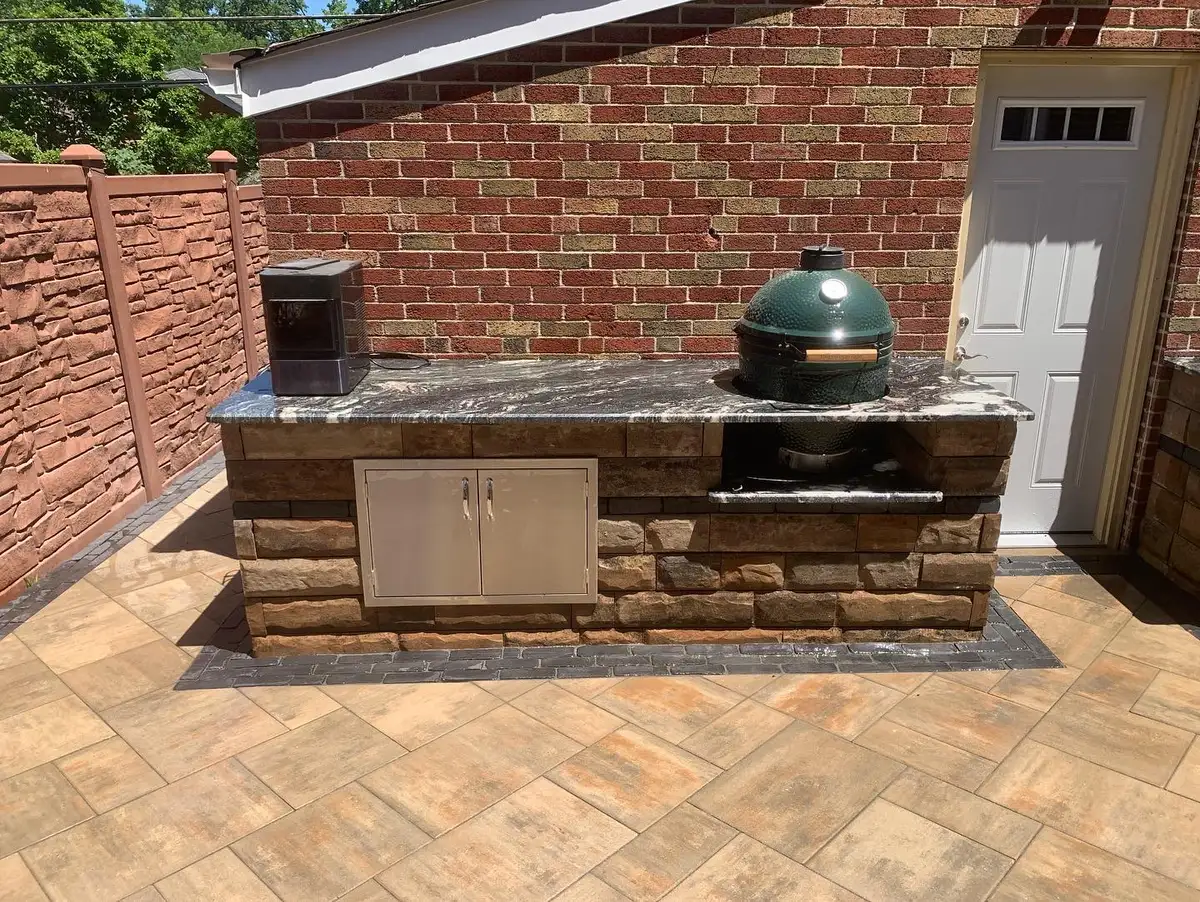
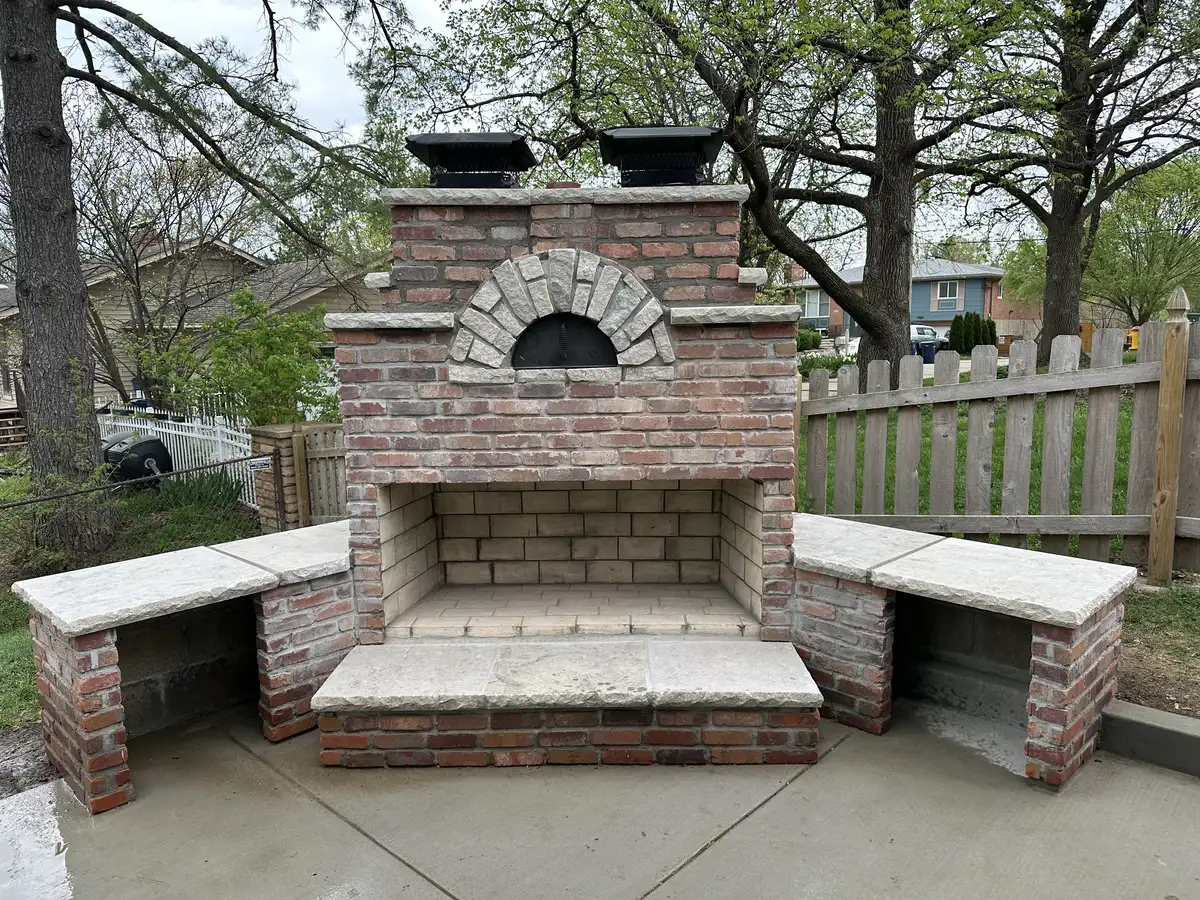
The appliance choice drives the whole outdoor kitchen design. A built-in gas grill needs ventilation, access panels, and safe clearances. A charcoal smoker or Big Green Egg needs a heat-resistant nest, landing space, and enough room to lift the lid without hitting a wall or pergola post. A pizza oven needs a deeper masonry base and a counter plan that gives you room to stage dough, tools, and finished food.
Green Operations builds kitchen surrounds from block, stone veneer, and compatible hardscape materials that handle freeze-thaw conditions in Missouri. We coordinate with licensed trade partners when gas, electric, or plumbing lines are part of the project, and we keep access panels reachable for future service. The result is a kitchen that can be used hard during summer cookouts and still hold up through winter.
Not every kitchen needs every appliance. Many strong designs start with one primary cooker, enclosed storage, a durable counter, and a place to set trays coming from the house. More complex projects can add refrigeration, sinks, side burners, trash drawers, warming drawers, or a dedicated smoker zone when the homeowner will actually use those features.
Base, Drainage, Utilities, and Clearances
Outdoor kitchens fail when the prep work is treated as decoration. The island must sit on a stable base, the patio surface has to pitch away from the house and cooking area, and any utility runs need to be protected before pavers go down. We plan the kitchen footprint before building the patio base so the structure is supported correctly.
Drainage matters around outdoor kitchens because counters, appliance doors, and seating areas all create places where water can collect. On sloped lots in Jefferson County and parts of West County, we often combine the kitchen with a retaining wall or raised patio. That lets us create a level work surface while directing runoff away from the house and away from the island.
Clearance is just as important. We leave room behind the cook for people to pass, separate hot appliances from vinyl siding and wood structures, and avoid placing smoke directly under low rooflines. If the kitchen is near a pool, fire pit, or outdoor dining area, we orient the cooking line so guests have a place to gather without blocking doors, steps, or walkways.
Outdoor Kitchen Materials That Match the Hardscape
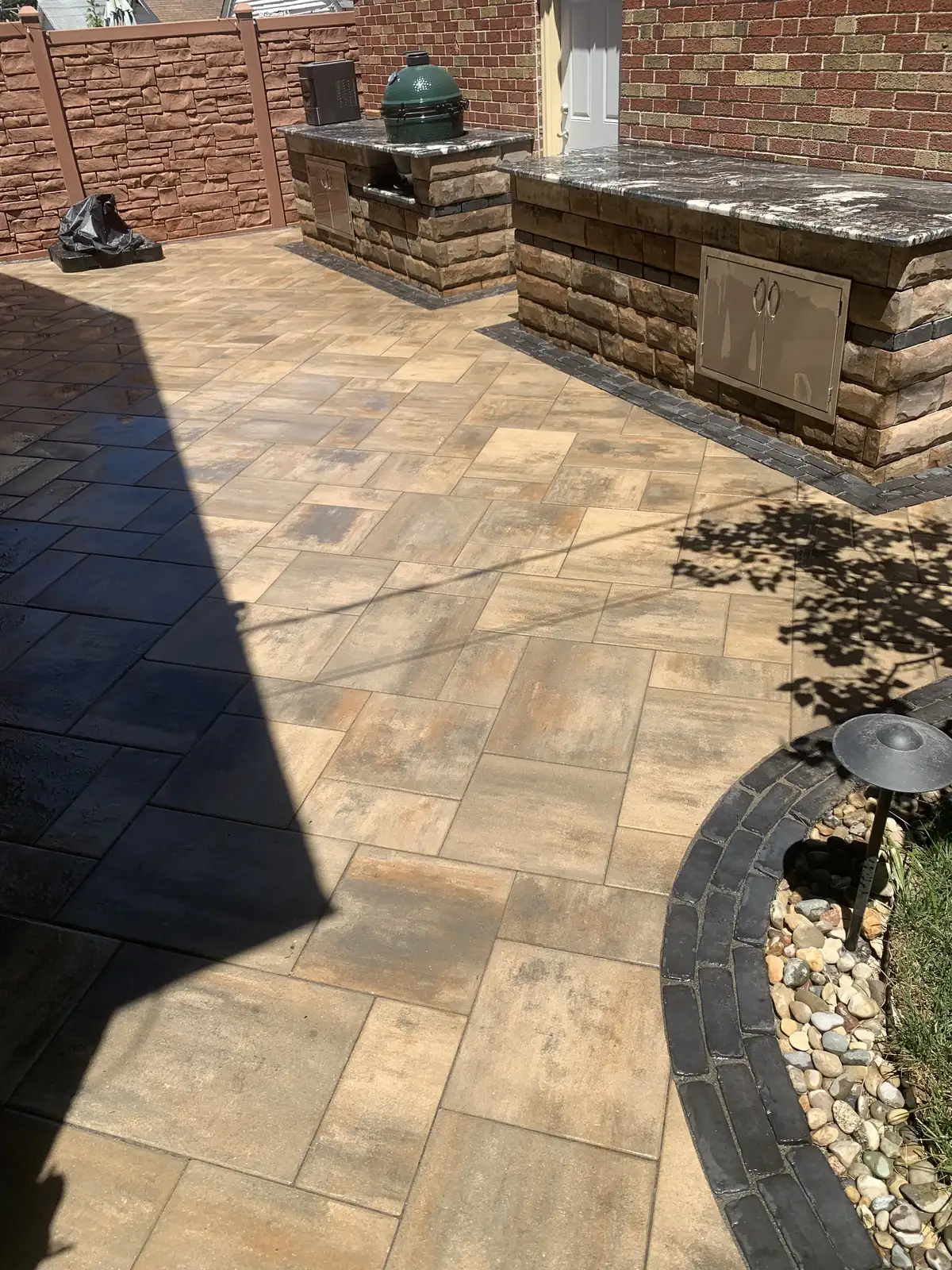
The kitchen should look like it belongs with the rest of the backyard. We help homeowners choose wall block, veneer, cap stone, counter material, and paver colors that coordinate with the house and surrounding hardscape.
Island Walls and Veneer
Block and stone kitchen surrounds are durable, repairable, and visually consistent with paver patios and seating walls. We avoid flimsy cabinet systems that look good in a showroom but struggle with Missouri weather. The island body is sized around the appliance specs, not forced into a generic kit.
Countertops and Caps
Outdoor counters need to tolerate heat, freeze-thaw cycles, grease, and regular cleaning. Depending on the design, we may recommend natural stone, concrete, porcelain, or granite. Counter overhangs are kept realistic so the surface is useful without creating weak unsupported edges.
Pavers Around the Kitchen
The patio pattern should support the kitchen visually and physically. Accent borders can frame the island, while darker pavers under cooking areas can be easier to live with around grease and charcoal. We keep joints tight and surfaces level so furniture and appliances sit correctly.
Lighting and Evening Use
Task lighting helps the cook see after sunset, while low-voltage path and step lighting keeps guests moving safely between the house, dining area, and fire feature. When lighting is planned during construction, wires are hidden and fixtures look integrated.
Our Outdoor Kitchen Build Process
Site Walk and Cooking Goals
We review the patio area, access, utilities, drainage, and how you want to cook. This is where we decide whether the kitchen belongs near the house, beside the pool, at the edge of a dining zone, or on a new paver terrace.
Layout and Material Plan
We size the island around appliances and clearances, then coordinate the paver pattern, wall material, counters, seating, steps, and lighting. You get a practical plan before the first paver is lifted or installed.
Base, Utilities, and Hardscape Construction
We prepare the base, coordinate utility rough-ins when needed, install pavers or supporting walls, and build the kitchen shell. Appliance openings, vents, access doors, and counters are checked against the final equipment specs.
Finish Details and Walkthrough
Final counters, trim, lighting, and cleanup are completed before Travis walks the project with you. We review care basics for pavers, counters, appliances, and seasonal shutoff items if plumbing is included.
What Affects Outdoor Kitchen Cost in St. Louis?
The biggest cost drivers are island size, appliance package, counter material, utilities, and whether new patio work or retaining walls are needed. A simple grill island on an existing suitable patio is a different project from a full kitchen built into a new multi-level paver terrace.
Basic outdoor kitchen islands generally start with a built-in grill or smoker, a durable surround, storage access, and counter space. Mid-range kitchens add L-shaped layouts, bar seating, upgraded counters, lighting, and more appliance openings. Larger builds may include sinks, refrigeration, pizza ovens, gas and electric coordination, pergolas, fire features, and pool-side seating. During the estimate, we separate must-have items from nice-to-have upgrades so the budget is clear.
If you are still comparing backyard priorities, our outdoor kitchen ideas guide explains common layouts, while the paver patio cost guide can help you understand the patio side of the project.
Outdoor Kitchen and Cooking Area Details
Examples of cooking zones, patio materials, and outdoor living features that can be combined into a kitchen-focused backyard plan.
Questions Homeowners Ask Before Building
Sometimes. If the existing patio is level, stable, and large enough, we may be able to build on it. If the base is weak, the surface drains poorly, or the kitchen needs utilities under the patio, rebuilding that area is usually the better long-term answer.
Yes. We coordinate those items with licensed trade partners when they are part of the scope. Gas, electric, and plumbing need to be planned early so access, shutoffs, drains, and appliance clearances are correct.
Most cooking lines need comfortable walking space behind the cook, landing counters near hot appliances, and a clear path to dining or serving areas. We size those clearances during the layout stage instead of squeezing the island into leftover space.
Yes. Outdoor kitchens often work best when paired with a paver patio, seating wall, fire feature, lighting, or pool deck. See our backyard transformation page for the broader planning approach.
Services That Pair With Outdoor Kitchens
Paver Patios
Build the stable, attractive surface that supports the kitchen, dining area, and foot traffic.
Outdoor Living
Add fire features, seating walls, shade structures, and entertainment zones around the kitchen.
Landscape Design
Use planting, lighting, and bed layout to soften the hardscape and frame the finished space.
Plan a Kitchen Built for the Way You Cook
Tell us what you want to cook, how you entertain, and what your patio needs to support. Travis will review the space and give you a practical outdoor kitchen plan.